Home » AI Receptionist UK
Virtual Receptionist UK – AI-Powered 24/7 Call Answering & Booking
TL;DR
Looking for a reliable virtual receptionist in the UK? At Clear Call we search through the fluff to get you real AI receptionists to get the best for your business. Our picks will answer calls instantly, books appointments, and route enquiries 24/7 – helping any UK business reduce missed calls and increase customer satisfaction.
An AI receptionist answers and manages business calls using voice AI
UK systems are built for UK numbers, accents, compliance, and working hours
Best suited to appointment-based and enquiry-heavy businesses
Quality varies significantly between providers
This page is your starting point; comparisons and pricing sit one layer down
If you already know what you’re looking for, jump to:
👉 Compare leading AI Receptionist set ups by Industry below
In This Guide
Explore AI receptionist setups by industry (UK)
Jump to the most relevant guide for your business type.
| Industry | Best-fit guide |
|---|---|
| Plumbers | AI receptionist for UK plumbers |
| Roofers | AI receptionist for UK roofers |
| Estate agents | AI receptionist for UK estate agents |
| Electricians | AI receptionist for UK electricians |
| Automotive | AI receptionist for automotive businesses |
| Law firms | AI receptionist for UK law firms |
| Solicitors | AI receptionist for UK solicitors |
| Food & beverage | AI receptionist for food & beverage |
| Drainage (emergency call-out) | AI receptionist for drainage emergency call-outs |
| Locksmiths | AI receptionist for UK locksmiths |
| Dental practices | AI receptionist for UK dental practices |
| Healthcare providers | AI receptionist for healthcare providers |
| Physiotherapists | AI receptionist for UK physiotherapists |
Want to Know How Much You Could Be Losing By Missing Out Of Office Calls?
What is a Virtual Receptionist?
Think of a virtual receptionist as your business’s new best friend on the phone – but smarter.
It’s an AI-powered assistant that answers calls instantly, understands what your customers need, and handles bookings or routes calls without making anyone wait.
No more “press 1 for sales” menus or missed opportunities. It’s like having a receptionist who never takes a coffee break, knows every UK accent, and works 24/7 to keep your business running smoothly.
Benefits of a Virtual Receptionist for UK Businesses
Here’s the deal: missed calls cost you money, time, and sometimes your sanity.
A virtual receptionist fixes that by answering every call, booking appointments, and routing enquiries all without the overhead of a full-time staff member.
It’s not just about saving cash; it’s about giving your customers a seamless, professional experience every time they call.
Plus, it frees up your team to focus on what really matters – growing your business!
How An AI Virtual Receptionist Works
AI / virtual receptionists aren’t just fancy answering machines.
They listen, understand, and act.
Using smart voice tech trained on UK accents, it picks up what callers say, checks your calendar in real time, books appointments, and even sends confirmations all while you’re busy doing your thing.
And if something’s tricky, it knows exactly when to hand over to a human. It’s like having a receptionist who’s always on point, never tired, and totally reliable.
Why UK Practices Are Replacing Human Overflow with AI Voice Agents
Most UK SMEs do not have a reception capacity problem. They have a coverage economics problem.
A dental practice in Bristol pays £18 to £24 per hour for front-desk staff. A financial advisory firm in Edinburgh uses an overflow answering service at £1.80 to £2.50 per call.
Both work until you calculate what happens during lunch cover, after 5pm, or when your receptionist is off sick and you miss twelve appointment requests in three hours.
The friction is not philosophical. It is operational. You either overpay for human redundancy, or you lose revenue to missed calls.
The third option, autonomous AI voice agents built for UK businesses, has moved from “interesting” to “default” in the last eighteen months.
Here is what changed. Modern AI receptionists do not route calls through a menu tree. They do not ask callers to “press 1 for sales.”
They answer instantly, understand natural conversational English (including regional accents from Manchester to Mayfair), and, critically, they write directly into your practice management system.
A caller books an appointment. The AI confirms availability in real time, writes the booking into Cliniko or Jane, sends the confirmation SMS, and logs the interaction. No human touches it unless the system is explicitly told to escalate.
This is not about sounding futuristic. It is about whether your reception function can scale without hiring, and whether you can afford to keep losing calls during the gaps that human-only coverage will always have.
That is the calculation UK operations directors are now making, and it is why the market for AI receptionists in the UK has moved from “pilot” to “procurement” faster than most people expected.
How an AI Receptionist Works in the UK
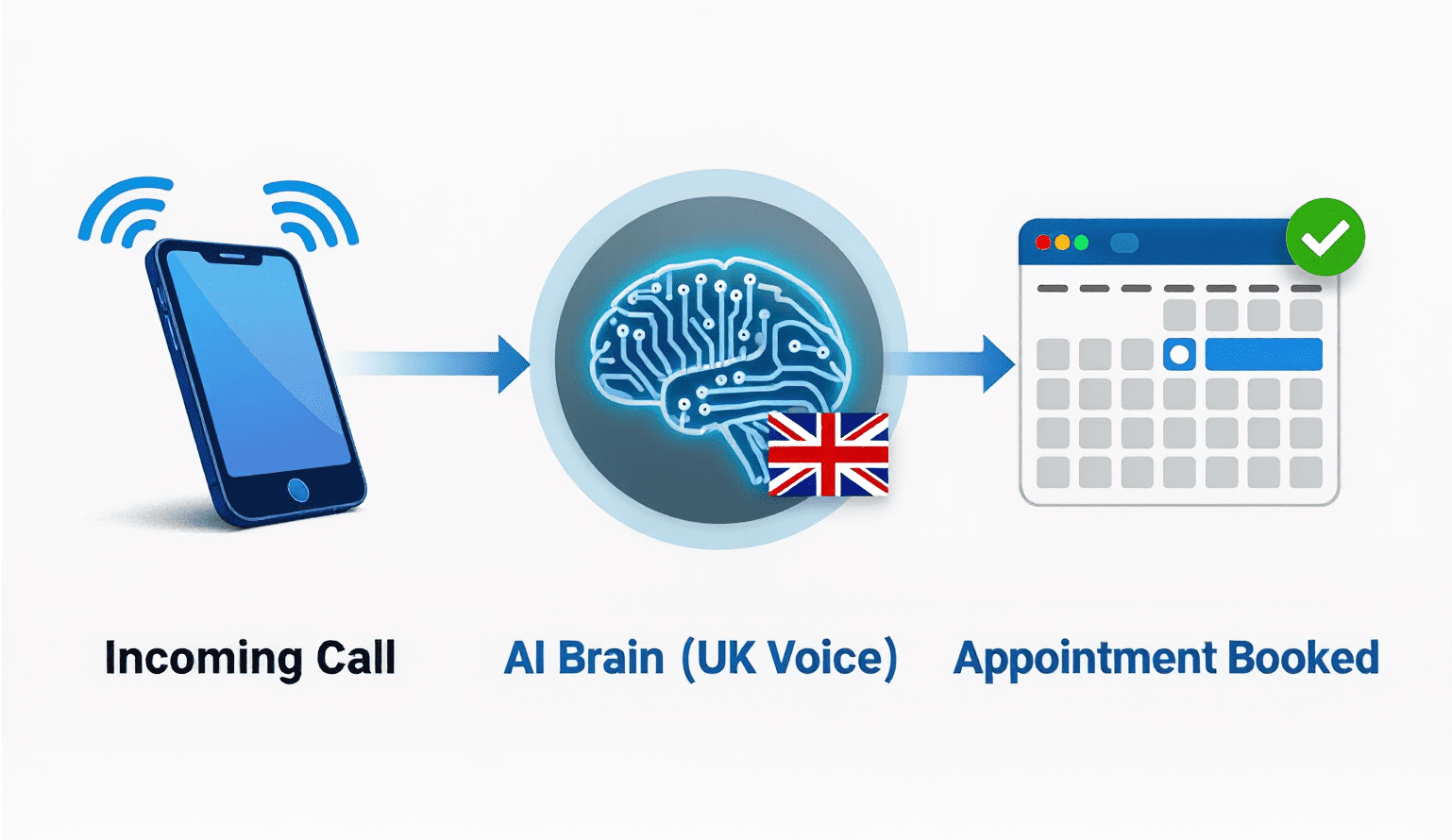
At a technical level, UK AI receptionist platforms combine:
Speech recognition trained on British accents and phrasing
Natural language understanding (NLU) to interpret intent
Call routing and scheduling logic
CRM or calendar integrations
Call summaries and transcripts for follow-up
From a business perspective, the important part is simpler:
Calls are answered immediately, handled consistently, and logged automatically.
UK-specific considerations matter. Reputable platforms account for:
UK phone numbers and call routing
Business-hours logic aligned to UK schedules
GDPR-aligned data handling
UK caller expectations (tone, phrasing, pace)
The UK fit: what most AI receptionists get wrong
Most "AI receptionist" tools are built to be broadly usable across countries. That sounds fine—until you're a UK business relying on phone leads, emergency call-outs, and bookings where small details decide whether the job is won or lost.
Here's what typically breaks when a platform isn't designed around UK reality:
UK callers don't talk like a script
Trades and local services get messy, high-context calls: "boiler's dropped pressure again," "water's coming through the ceiling," "need a locksmith tonight," "can you do a quote for next week?" A UK-ready receptionist has to capture the right details fast—postcode, access, parking constraints, urgency, property type—without forcing the caller into rigid menus.
UK urgency patterns are different (and high intent)
Many UK niches are dominated by "right now" demand: leaks, drainage, lockouts, roofing damage. The receptionist must recognise emergency language, prioritise correctly, and escalate instantly—otherwise you lose the lead to the next company on Google.
Booking expectations are local
UK customers expect practical outcomes: confirm availability, send a text, book a slot, and tell them what happens next. If an AI receptionist can't reliably convert calls into bookings—or at least qualified leads—it's just a nicer voicemail.
Brand trust is everything in the UK
For solicitors, dental practices, and healthcare providers, the first call is credibility. Callers want calm, professional handling, clear next steps, and the ability to transfer to a human when needed—without sounding like a call centre script.
Compliance and boundaries matter
In regulated categories—legal and healthcare especially—the receptionist must know what not to do: avoid giving advice, avoid over-promising outcomes, and capture information safely while routing to the correct team member.
The outcome you want: fewer missed calls, more qualified bookings
The point isn't "AI for AI's sake." It's:
- Answer every call, including after-hours
- Qualify the lead—job type, urgency, location, budget where relevant
- Book or route correctly
- Create a clean audit trail via summaries and call logs
Then your team spends time on paid work, not call-back chaos.
If you want a setup tailored to your industry, use the guides below to see the exact call flows and intake details that convert in the UK.
AI receptionist vs traditional options
Most UK businesses consider an AI receptionist when one of these breaks down:
In-house reception
Expensive to staff consistently
Limited to office hours
Coverage gaps during breaks, sickness, holidays
Virtual or outsourced reception
Ongoing per-minute costs
Variable quality depending on agent
Limited system integration
Basic IVR systems
Rigid menus callers dislike
Poor conversion and abandonment rates
An AI receptionist sits somewhere different: automated, consistent, and always on, without sounding like a menu system from 2009.
Who uses AI receptionists in the UK?
AI receptionists are most effective for businesses where calls follow predictable patterns.
Common examples include:
Clinics, dental practices, and private healthcare
Estate agents and property services
Legal and professional services
Trades and home services
Agencies handling high enquiry volume
If most of your calls involve booking, rescheduling, basic questions, or routing — an AI receptionist is usually a strong fit.
For industry-specific setups, see:
Industry-specific AI Receptionists
- AI Receptionist for Dentists (coming soon)
Benefits of an AI receptionist
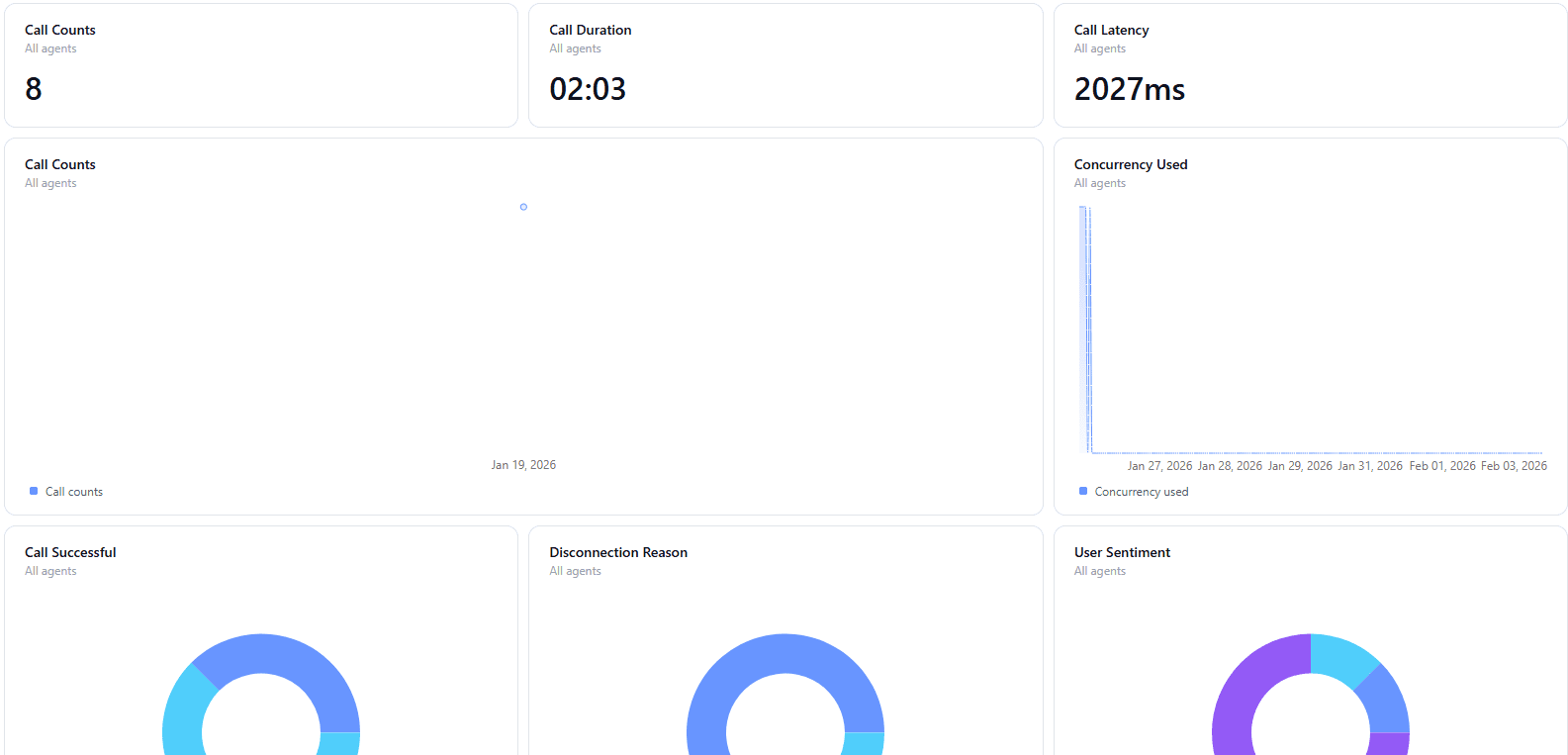
When implemented well, businesses typically see:
Fewer missed calls
Faster response times
More appointments booked
Reduced staff interruption
Clear call records and summaries
Lower ongoing call-handling costs
The benefit isn’t “replacing people”. It’s removing repetitive work so human staff can focus where they’re actually needed.
Limitations (and when not to use one)
AI receptionists are not magic.
They’re a poor fit if:
Every call is complex and bespoke
Call volume is extremely low
You rely heavily on emotional nuance in early conversations
The best systems are also not set-and-forget. They require sensible configuration, clear rules, and occasional refinement — especially early on.
Best AI receptionist software in the UK
Not all AI receptionist platforms are equal.
Differences between providers typically include:
Call handling quality
Booking and CRM integrations
Pricing structure
Industry suitability
Transparency around limitations
We maintain a continuously updated comparison here:
Best AI Receptionist Software in the UK
That page compares leading platforms side-by-side, including pros, cons, and who each option suits best.
AI receptionist pricing in the UK
Pricing varies widely depending on:
Call volume
Features used (booking, transfers, summaries)
Integrations
Whether pricing is per-minute, per-call, or flat-rate
Typical UK costs range from:
£40–£150/month for smaller setups
More for high-volume or complex routing
Full breakdowns, examples, and hidden costs are covered here:
AI Receptionist Pricing & Costs
Is an AI Receptionist Right for Your Business?
For the right business, yes.
The strongest ROI cases usually involve:
High enquiry volume
Missed or delayed calls
Staff stretched thin
Clear call patterns
For very small or highly bespoke operations, it can be unnecessary. That’s why comparisons matter — and why this site exists.
(If you’re reading this and thinking “this sounds useful, but I want to see real options”, that’s exactly the right instinct.)
FAQs
Is an AI receptionist legal in the UK?
Yes. AI receptionists are legal to use in the UK provided data handling complies with GDPR and callers are not misled in regulated contexts.
Do callers know they’re speaking to AI?
Sometimes. Often they don’t. What matters more is whether the call is handled quickly and correctly.
Can an AI receptionist book appointments?
Most modern systems can, provided they integrate with your calendar or booking software.
Is this better than a virtual receptionist?
It depends. AI systems are more consistent and scalable; human services can handle nuance better. Many businesses trial AI first due to cost and availability.
Will this replace my staff?
Usually no. It reduces interruptions and missed calls rather than replacing frontline staff entirely.
Explore the Best AI Receptionist Solutions Tailored for Your Industry in the UK
Finding the perfect AI receptionist means choosing one that understands the unique needs of your business sector. Whether you’re a tradesperson, a legal professional, or part of the automotive industry, we’ve got you covered with expert-tested solutions designed specifically for you.
- Discover the best AI receptionist for plumbers that handles emergency calls and booking with precision.
- Explore AI receptionist options for the automotive industry to keep your service bays full and customers happy.
- See why UK electricians trust our AI receptionists for seamless call handling and job scheduling.
- Find out how estate agents benefit from AI receptionists that capture leads and book viewings 24/7.
- Learn about AI receptionists tailored for UK law firms to manage sensitive client calls professionally.
- See how we have rated AI receptionists for Drainage Companies to manage sensitive client calls professionally.
These industry-specific AI receptionists are designed to reduce missed calls, improve customer experience, and streamline your operations. Click through to find the perfect fit for your business.
Where to go next
This page is the starting point.
Next steps:
Compare leading platforms → Best AI Receptionist Software in the UK
Understand costs → AI Receptionist Pricing & Costs
Explore industry use cases → Industry-specific AI Receptionists
Clearcall.agency exists to help you choose sensibly, not push one solution at all costs. If a tool isn’t right for your situation, we’ll say so.
That’s the whole point.